Physical Address
College House, 2nd Floor, 17 King Edwards Road, London, HA4 7AE
Physical Address
College House, 2nd Floor, 17 King Edwards Road, London, HA4 7AE
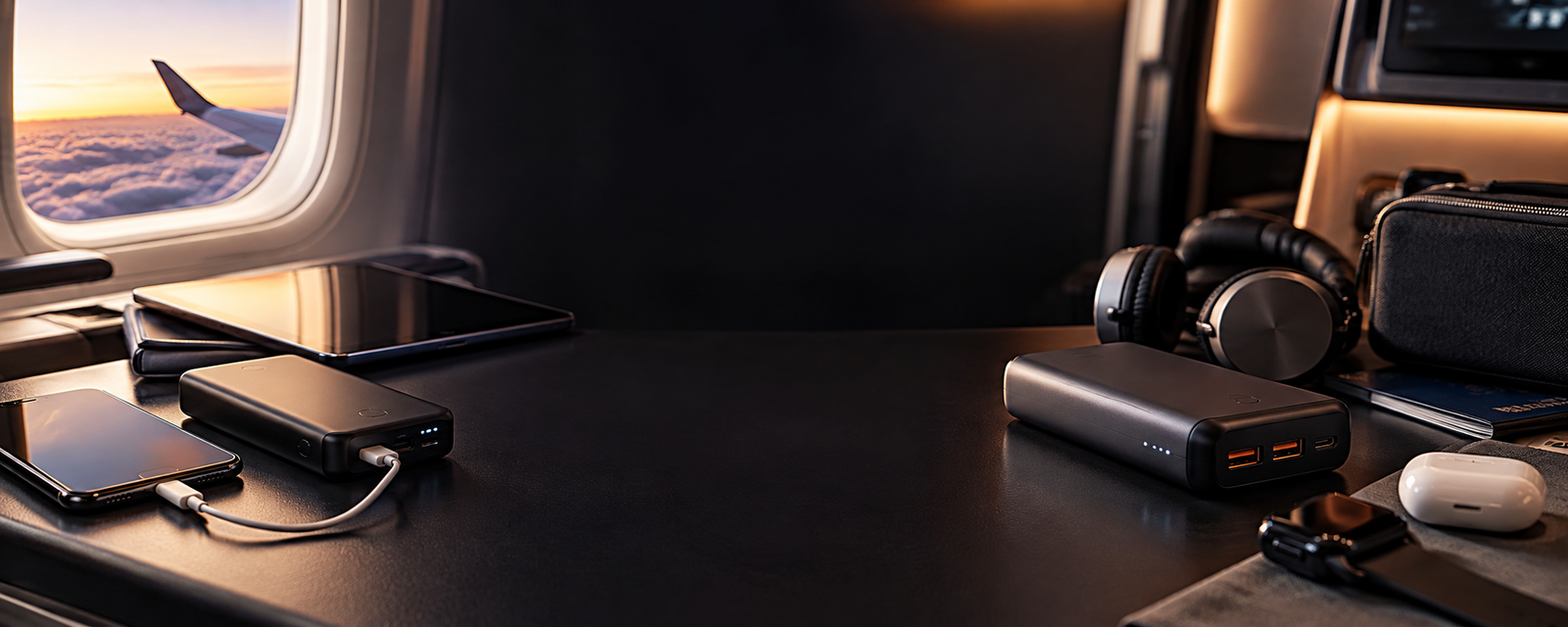
Long flights can drain your phone, tablet, and laptop batteries faster than expected. Whether you’re travelling internationally, working remotely, watching movies, or keeping your devices ready for airport transfers, having a reliable portable power bank can make a big difference.
Not every power bank is suitable for air travel, though. Some are too heavy, some don’t offer enough charging capacity, and others may exceed airline battery restrictions.
The ideal travel power bank should offer a good balance of battery capacity, charging speed, portability, and airline compatibility.
In this guide, we’ve selected six portable power banks worth considering for long flights in 2026. From lightweight options for smartphones to powerful models designed for laptops, there’s an option for different types of travellers.
| Power Bank | Best For | Capacity | FAA Compliant | Check Price |
|---|---|---|---|---|
| Anker Nano Power Bank | Compact travel charging | 10,000mAh | ✓ ~37Wh | Anker Nano (10,000mAh) |
| Anker 737 Power Bank | Phones, tablets and laptops | 24,000mAh | ✓ 86.4Wh | Anker 737 (PowerCore 24K) |
| Anker Prime Power Bank | High-capacity charging | 27,650mAh | ✓ 99.54Wh | Anker Prime 27,650mAh |
| UGREEN Nexode Power Bank | Laptop & multi-device | 25,000mAh | ✓ ~92.5Wh | UGREEN Nexode 25,000mAh |
| NITECORE NB10000 Gen4 | Lightweight travel | 10,000mAh | ✓ ~39Wh | NITECORE NB10000 Gen4 |
| INIU 25,000mAh Power Bank | High-capacity value | 25,000mAh | ✓ ~92.5Wh | INIU 25,000mAh 100W |
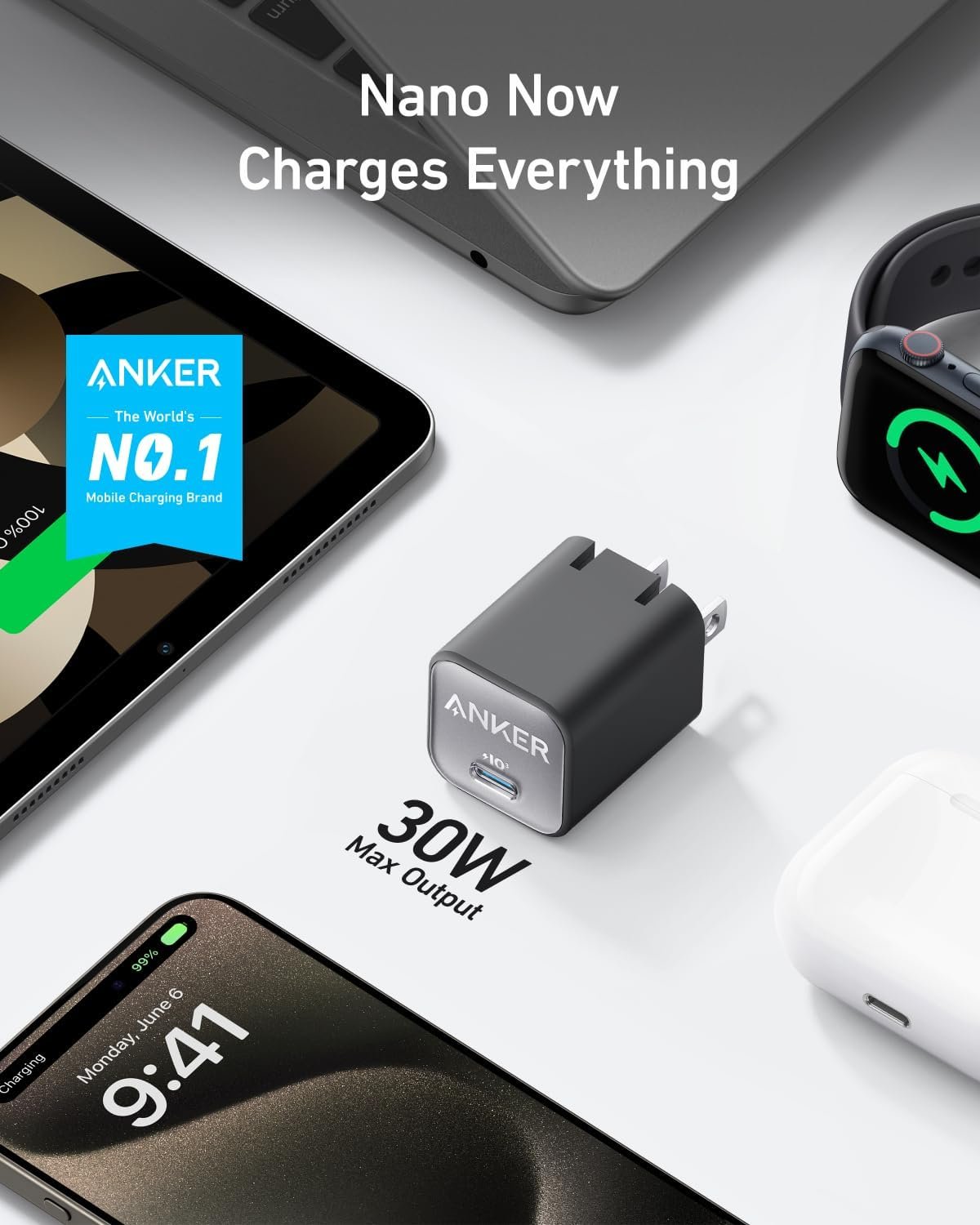
When travelling, carrying less equipment can make a journey more comfortable. The Anker Nano 10,000mAh power bank is designed for people who want a compact charger for everyday devices.
Its 10,000mAh capacity makes it suitable for keeping a smartphone powered during airport transfers, connecting flights, and long journeys. The built-in USB-C cable on the A1259 version also means you don’t necessarily need to carry an additional charging cable.
With up to 30W output, it is a convenient option for compatible smartphones and other smaller USB-C devices.
If you travel with a smartphone, tablet, and USB-C laptop, a larger power bank can be more useful than a compact phone charger.
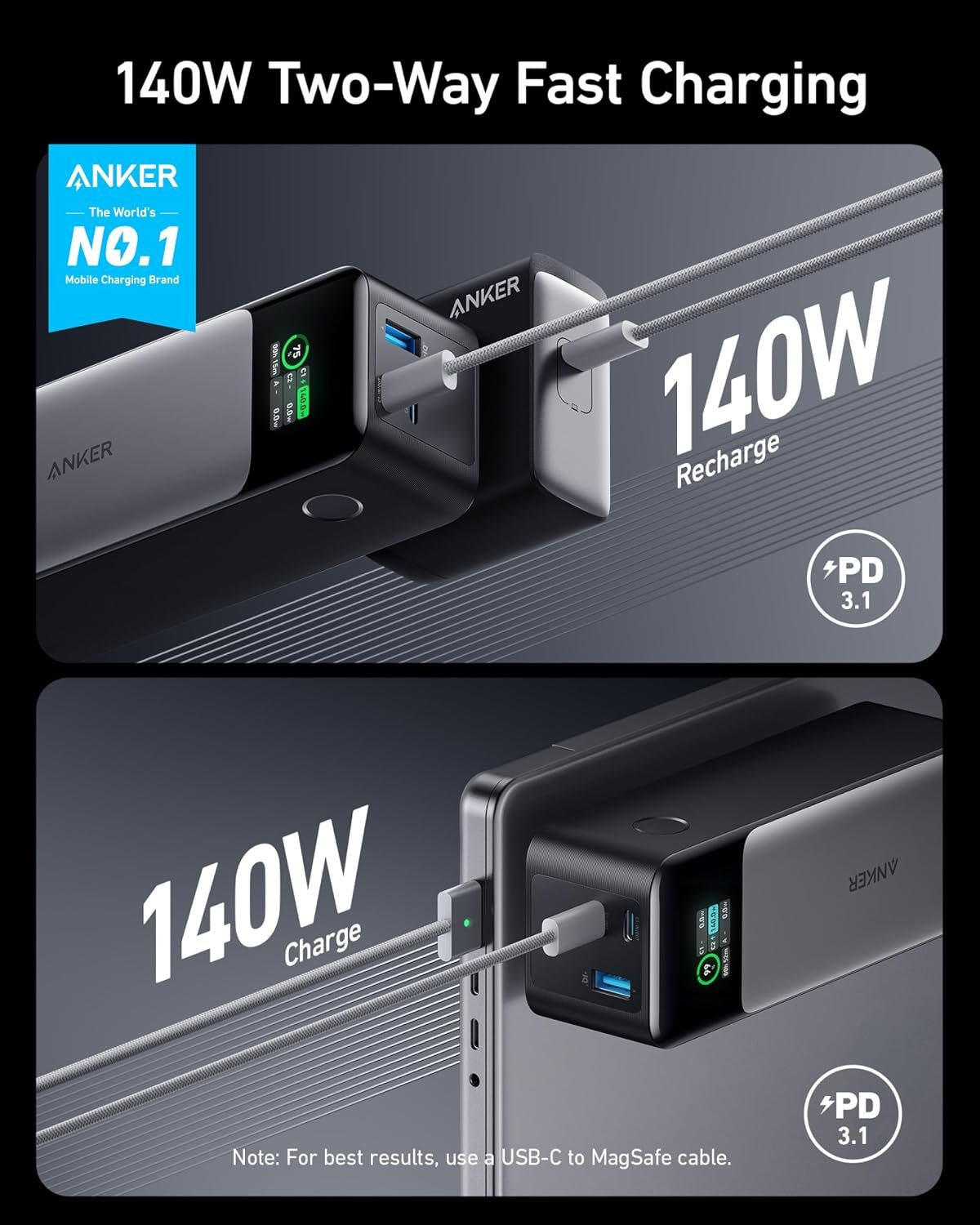
The Anker 737 Power Bank, also known as the PowerCore 24K, offers a 24,000mAh capacity and high-output USB-C charging. Its 140W maximum output makes it suitable for compatible laptops as well as phones and tablets.
A digital display provides useful information about charging power and remaining battery capacity, helping travellers understand how much power is available.
Its 86.4Wh rating is below the FAA’s 100Wh threshold, although airline-specific restrictions should still be checked.
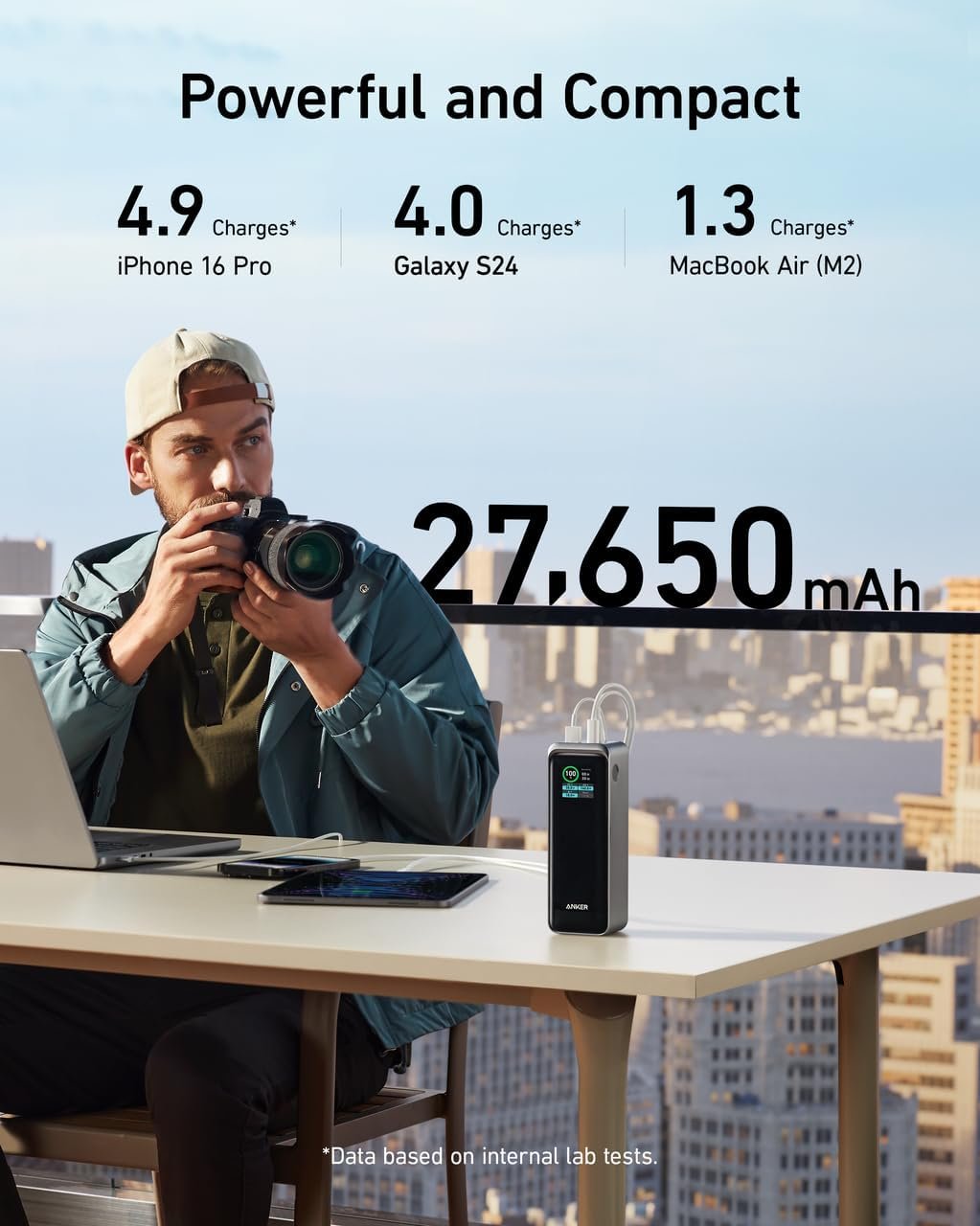
For travellers who want substantial battery capacity in one portable charger, the Anker Prime 27,650mAh model is worth considering.
It offers a high-capacity battery with a combined output of up to 250W, making it suitable for charging multiple compatible devices. It is particularly useful for people travelling with power-hungry laptops, tablets, and smartphones.
Its 99.54Wh rating places it just below the FAA’s 100Wh threshold. However, it is a relatively heavy option, so it makes more sense for travellers who genuinely need the extra capacity.
A long-haul flight can become a mobile office for remote workers. If you plan to work on presentations, edit documents, or handle business tasks while travelling, a laptop-compatible power bank can be a useful addition.
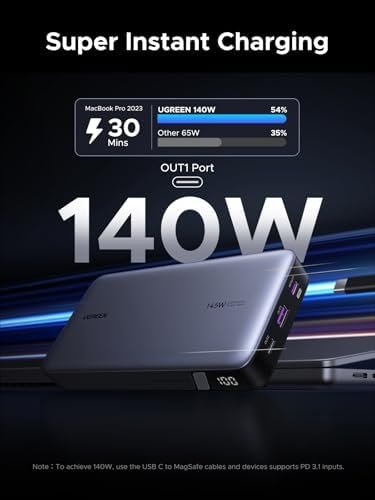
The UGREEN Nexode 25,000mAh power bank offers up to 145W total output and supports high-speed USB-C charging for compatible devices.
Its capacity is approximately 92.5Wh, keeping it below the FAA’s 100Wh threshold. The high output makes it a practical choice for travellers who need more than basic smartphone charging.
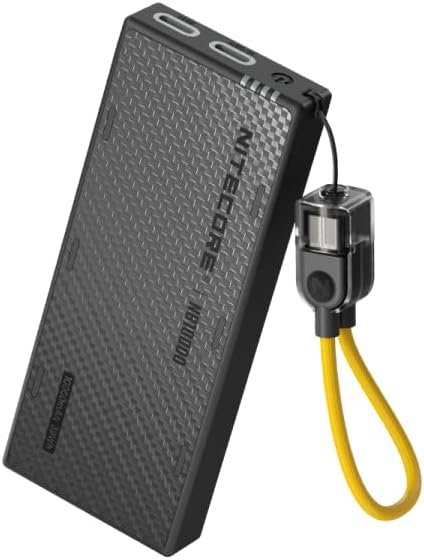
Not every traveller needs a large battery pack. For people who prioritise lightweight luggage, the NITECORE NB10000 Gen4 offers a more compact alternative.
With a 10,000mAh capacity and a lightweight carbon-fibre construction, it is designed for portability. Its compact form makes it suitable for travellers who want to keep their phones and smaller electronic devices charged without adding much weight to their bags.
It is especially appealing to minimalist travellers, hikers, and backpackers who pay close attention to the weight of their equipment.
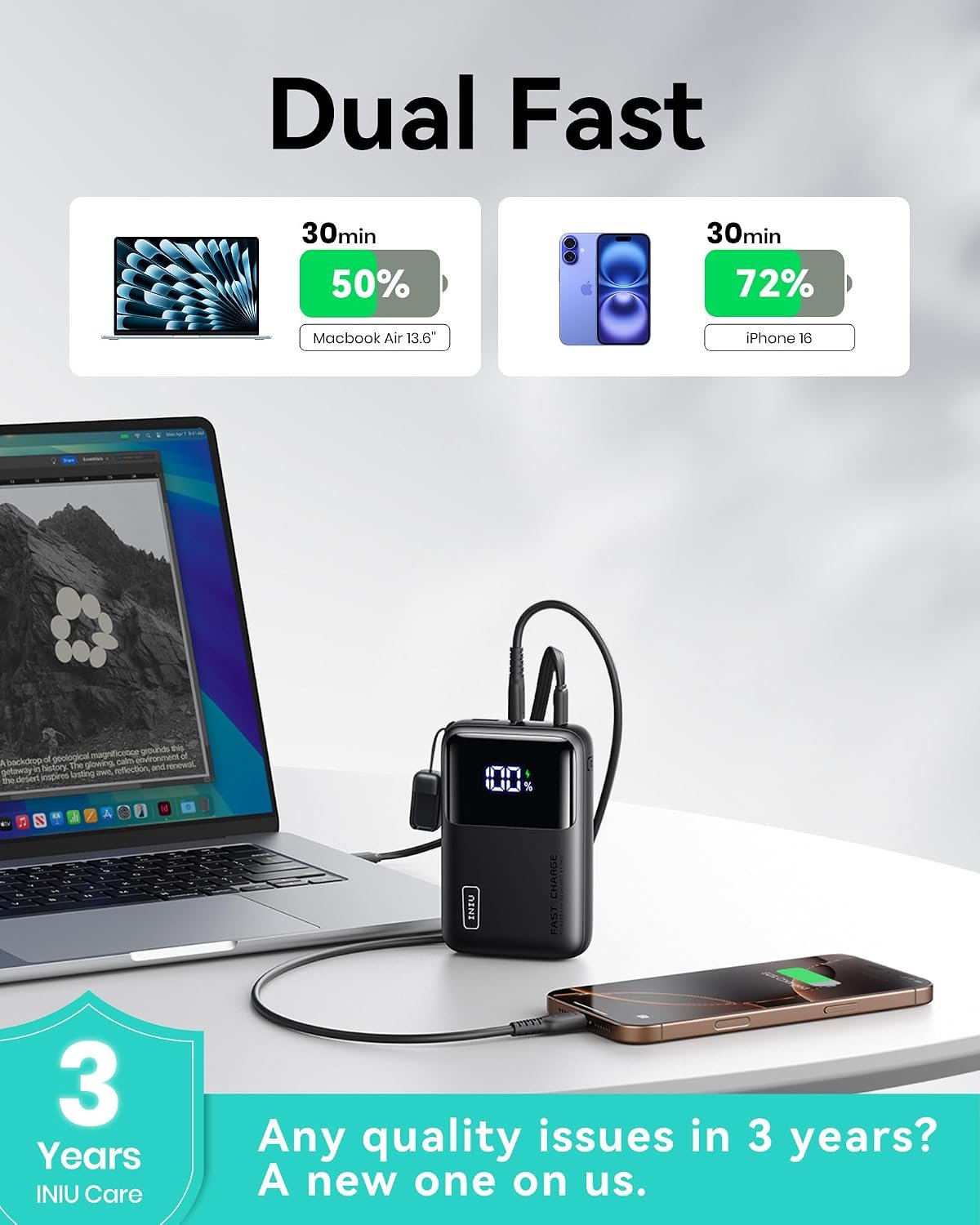
If you want substantial battery capacity without moving into the most expensive premium category, the INIU 25,000mAh 100W power bank is another option to consider.
Its 100W USB-C output supports compatible laptops, tablets, and smartphones. The large capacity is useful for longer journeys when access to a charging outlet may be limited.
At approximately 92.5Wh, it sits below the FAA’s 100Wh threshold. Check the exact model and battery rating on the product itself before flying, as specifications can differ between product generations.
Before purchasing a portable charger, consider how many devices you carry and how long you expect to be away from a power outlet.
10,000mAh: Suitable for smartphones and lightweight travel.
20,000mAh: A useful balance for phones, tablets, and some laptop top-ups.
25,000mAh: Better suited to travellers who carry multiple devices or need laptop charging.
Charging speed matters when you have limited time between flights or during a short layover. Look for USB-C Power Delivery (PD) support. A 30W model can be suitable for many smartphones, while compatible laptops may require 65W, 100W, or more.
A high-capacity power bank may sound attractive, but it can add considerable weight to your carry-on bag. If you only need to charge a smartphone, a 10,000mAh option may be more practical.
Lithium-ion batteries are strictly regulated. Always verify the battery’s watt-hour (Wh) rating printed directly on the casing before flying to prevent confiscation at airport security.
The number of charges depends on your phone’s battery size, the power bank’s usable capacity, and energy losses during charging.
As a general illustration, a 10,000mAh power bank may provide around one to two full smartphone charges, while a 20,000mAh model may provide several charges.
These are estimates rather than guaranteed results. Actual performance varies with the phone, battery condition, charging speed, and power bank efficiency.
Lithium-ion cells have a nominal internal voltage of 3.7V. When charging devices via USB (at 5V, 9V, or 20V PD), voltage conversion circuitry and thermal dissipation consume roughly 15% to 25% of energy. A 10,000mAh power bank typically yields around 6,500mAh to 7,500mAh of actual deliverable output.
For most travellers, 10,000mAh to 20,000mAh offers a useful balance between portability and charging capacity. People carrying laptops may prefer a higher-output 20,000mAh to 25,000mAh model, provided it complies with airline restrictions.
A typical 20,000mAh lithium-ion power bank is approximately 74Wh at a nominal cell voltage of 3.7V. This is well below the FAA’s 100Wh threshold. However, check the rating printed on the actual power bank and your airline’s specific rules.
No. Under FAA passenger guidance and international aviation safety regulations (ICAO/IATA), spare lithium batteries, including power banks, must be carried in carry-on baggage and cannot be placed in checked luggage.
Yes, if the power bank supports the laptop’s charging requirements and the airline permits its use. Check the USB-C output wattage, Power Delivery compatibility, and airline rules before travelling.
For smartphone-focused travellers, 10,000mAh can be sufficient for everyday backup charging. If you travel with multiple devices or spend long periods away from charging outlets, a 20,000mAh model may be more suitable.
Prioritise a clearly marked watt-hour rating, a suitable battery capacity, USB-C charging, reliable safety features, manageable weight, and compatibility with your devices. Also verify the airline’s current battery policy.
A reliable power bank can make long flights more comfortable, especially when you depend on your phone, tablet, or laptop throughout the journey.
The Anker Nano is a convenient option for lightweight smartphone charging, while the Anker 737 and UGREEN Nexode are worth considering for travellers who need laptop power. For people who want higher capacity, the Anker Prime and INIU models offer more substantial charging options. The NITECORE NB10000 Gen4 is a strong choice when keeping luggage light is the priority.
Before choosing, think about your devices, charging needs, and travel style. Most importantly, check the battery’s watt-hour rating and your airline’s rules before heading to the airport.