Physical Address
College House, 2nd Floor, 17 King Edwards Road, London, HA4 7AE
Physical Address
College House, 2nd Floor, 17 King Edwards Road, London, HA4 7AE
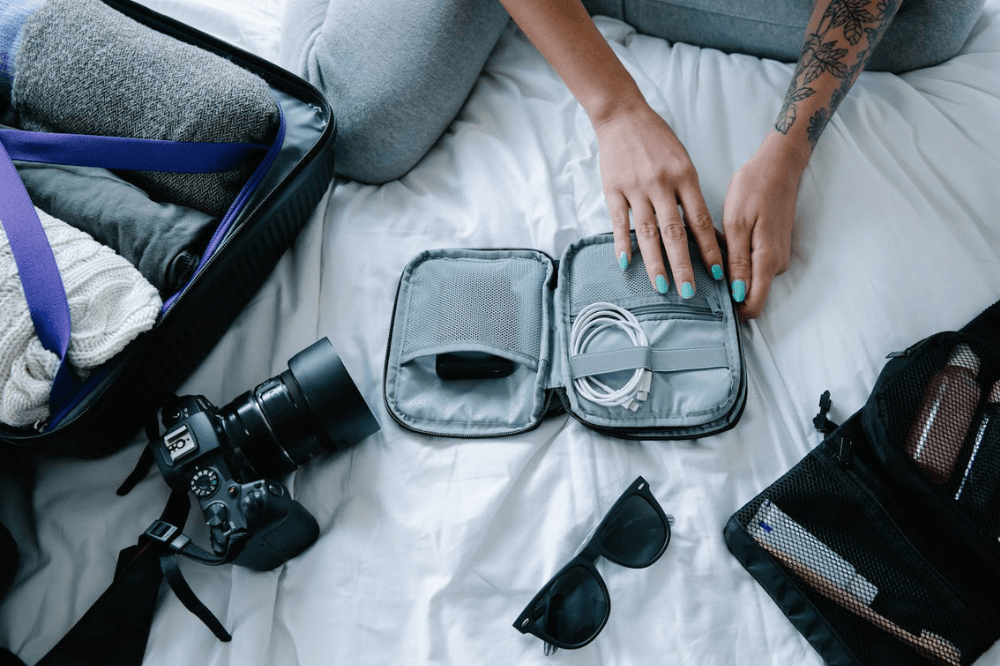
Most digital nomads don’t need more gear—they need Better, More Reliable Gear. If you’re working remotely while traveling for weeks or months, the right products can make your journey more comfortable, organized, and productive.
This Digital Nomad Packing list covers 10 essential travel and remote-work products worth considering, including power, audio, organization, comfort, and everyday travel gear. Each recommendation is chosen to help you build a practical, lightweight setup without overpacking.
Everything on this list earns its spot for a reason!
| Product | Type | Why It’s Useful |
|---|---|---|
| Apple MacBook Air 13-Inch (M4, 2025) | Laptop | Lightweight, powerful, and built for all-day remote work with up to 18 hours of battery life |
| Anker 140W 4-Port GaN Charger | Charger | Charges your laptop, phone, and tablet simultaneously |
| Anker PowerCore 10K Power Bank | Power Bank | Slim backup battery that tops off your phone and earbuds between outlets |
| Anker Nano 5-Port Travel Adapter | Travel Adapter | Covers most plug types worldwide in a compact, pocket-friendly form |
| Sony WF-1000XM6 | Earbuds | Top-tier noise cancelling keeps you focused |
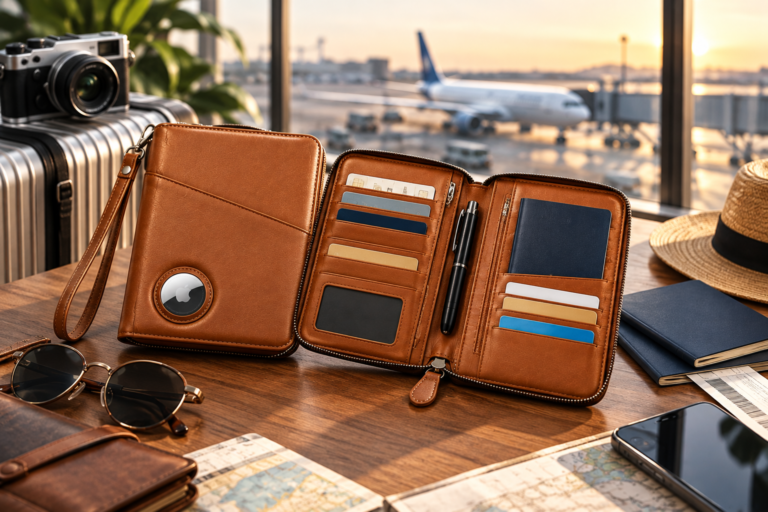
| Bellroy Flip Case Second Edition | Card Wallet | Slim, minimal card wallet that keeps essentials organized without the bulk |
| Lewis N. Clark RFID Neck Wallet | RFID Travel Pouch | Keeps your passport, cash, and backup cards safe and hidden under your clothing |
| YETI Rambler 20 oz Tumbler | Travel Mug | Keeps coffee hot for hours during long work sessions |
| Rainleaf Microfiber Travel Towel | Travel Towel | Dries fast, packs small, and works great |
| TRIPPED 3-Piece Toiletry Bag Kit | Toiletry Organizer | Hang-anywhere system that keeps bathroom essentials organized and airport-ready |
For digital nomads who need a reliable, travel-ready laptop that will last for years, the Apple MacBook Air 13-inch with M4 chip is one of the best options on the market. Weighing just 2.7 pounds, it’s light enough to carry without weighing you down.
At its core is the Apple M4 chip, featuring a 10-core CPU and up to a 10-core GPU (base configurations ship with an 8-core GPU; the 10-core GPU is available on higher-tier models) with 120GB/s memory bandwidth — enough processing power to handle multitasking, video calls, content editing, and graphic design work with ease.
The 13.6-inch Liquid Retina display has a 2560×1664 resolution at 224 pixels per inch and supports 1 billion colors, making it sharp and clear whether you’re working indoors or in a bright café. Battery life is a standout feature, rated at up to 18 hours of video streaming and tested at over 15 hours of real-world use (easily covering a full workday without hunting around for a power outlet).
Connectivity is strong too, with two Thunderbolt 4 ports, MagSafe charging, Wi-Fi 6E, and Bluetooth 5.3, plus support for up to two external displays. A 12MP Center Stage camera keeps video calls clear and crisp on the road.
If you’re still deciding between laptop models, our guide to the best laptops for digital nomads compares several options side by side to help you narrow down the choice.
If your main work machine is a MacBook, this Anker charger is worth a serious look. It handles multiple devices at once, slips into a backpack pocket, and actually delivers the wattage it promises. That’s thanks to the GaN (gallium nitride) technology, which squeezes high power output into a much smaller block. It also comes with a USB-C cable that supports 100W+, so you’re not stuck scrambling around for a compatible cable separately.
The four ports give you real flexibility: two full-speed USB-C ports that each handle up to 140W on their own, plus a lower-power USB-C and a USB-A port for phones, watches, and smaller devices.
The built-in display is genuinely handy when you’re working online — it shows live power output and per-port status, so you can tell at a glance if your laptop is actually charging at full speed or if a cable is holding it back. If you regularly charge a MacBook, phone, and iPad at the same time, having one brick handle all of it — no extra adapters, no hunting for a power strip — makes the price easy to justify.
The folding plug and slim design fit neatly into a laptop sleeve or backpack pocket, and while it does run warm under a full 140W load, the built-in thermal monitoring keeps everything within safe limits.
If you’re a world traveler constantly juggling a phone, earbuds, and other small gadgets, the Anker PowerCore is worth a serious look. It’s a reliable mid-range power bank that does its job well — no fuss, no unnecessary bulk. At 10,000mAh, it’s one of the slimmer options out there, slim enough to slip into the side pocket of your travel backpack or laptop sleeve. It’ll fully recharge a modern smartphone twice over and give your tablets and earbuds a solid top-up too.
On the tech side, it uses Anker’s PowerIQ and VoltageBoost to automatically adjust the output for whatever you plug in. You get a USB-C port (input and output) plus a USB-A port, so you can charge two devices at the same time. There’s also a trickle-charge mode for low-draw gadgets like wireless receivers or small remotes — handy for not cutting them off mid-charge.
A big plus: users consistently say it runs cool, even after multiple full charge cycles. If you’re building a long-term travel kit, this fits neatly alongside your laptop and charger without pushing you over the weight limit.
If you’re regularly hopping between countries, the Anker Nano 5-port travel adapter is a solid pick — and it’s noticeably smaller than most others on the market. It covers four plug types (US/Canada, EU, UK, and Australia/China), so you can plug in across most popular digital nomad destinations without hauling a bunch of separate adapters. The unit is roughly credit-card-sized, and the pins retract when not in use, so it tucks cleanly into a front pocket without catching on anything.
The 5-port setup includes one 2-pin AC outlet, two USB-A ports, and two USB-C ports — meaning you can run a charger brick and several USB devices all at once. The USB-C ports deliver up to 20W each when used solo, which is fast enough for a modern phone, and smart temperature control keeps it from overheating.
Reviewers across Europe, the UK, Asia, and the Americas say it holds up well and feels sturdy without being one of those chunky brick-style universal travel adapters.
If you’re working remotely in noisy places, the Sony WF-1000XM6 earbuds are hard to beat — loud cafés, busy train stations, long-haul flights are no longer an issue!
Sony claims these have some of the strongest noise cancellation in the in-ear category, backing it up with dual processors and multiple microphones that filter out background noise while keeping your music, podcasts, and calls crystal clear. There’s also a companion app with a 10-band equalizer co-developed with mastering engineers, so you can tune the music to your required taste.
You get up to 8 hours from the earbuds with ANC on, 12 hours with it off, and 24 hours total with the charging case — plenty for a full workday or a long flight. And if you’re rushing through an airport, a 5-minute quick charge gives you an extra hour of playback.
For calls, they also keep your voice clear even in noisy coworking spaces. If focus and call quality matter on your digital nomad journey, these are one of the better investments you can make in your daily work setup.
If you want to keep your card setup slim and pocket-friendly without sacrificing security or style, the Bellroy Flip Case Second Edition is one of the most popular on Amazon. It’s a mid-to-top-range card wallet built around a double-sided hard-shell case with magnetic closures.
It holds up to 8 cards, or 6 cards plus a couple of folded bills. There’s a quick-access side for one or two priority cards you can flick out with your thumb, while the rear section handles the rest. The magnetic trapdoors snap shut cleanly, keeping the profile thin enough for a front pocket without the usual bulge.
The exterior combines premium eco-certified leather with durable polymer — solid and weather-resistant. The interior is molded to stop cards from shifting around while you’re moving through airports, markets, or transit systems.
If security is a top concern while traveling through crowded areas, our guide to the best security wallets for travel covers RFID protection and other theft-prevention strategies.
When you’re moving through crowded airports, train stations, and busy markets, having a secondary layer for your passport, cash, and backup cards is one of those small decisions that quietly pays off.
The Lewis N. Clark Neck Wallet is a budget-friendly option that keeps your essentials close without turning into a complicated system. It’s a slim, lanyard-style pouch made from lightweight ripstop nylon, with an RFID-blocking interior that shields cards and passports from remote scanning. Zipped compartments and mesh pockets handle cash, IDs, tickets, and small documents.
The adjustable strap lets you wear it around your neck, under a shirt, or across your chest. Reviewers say it’s light enough to forget you’re wearing it through a full transit day, but secure enough to keep everything in one place.
It works especially well in environments where bags and pockets are easy targets. It tucks away under clothing cleanly, adding a layer of discretion without being bulky.
For a minimalist travel kit that already has a slim front-pocket wallet, this is a low-cost, low-bulk neck pouch that rounds out the document layer of your setup nicely.
If you’re spending long stretches working from cafés, hotel lobbies, or coworking spaces, having a drinking cup that keeps coffee hot for hours — without leaking into your bag — is an essential!
The 20 oz YETI Rambler is a top-end stainless-steel tumbler built with double-wall vacuum insulation and a stainless-steel body. The exterior stays cool and dry while the drink inside holds its temperature far longer than a standard travel mug. At 20 oz, it’s large enough for a proper morning coffee but still fits standard cup holders and café table slots.
The MagSlider lid opens and closes with one hand using a magnet, so you can sip while walking, biking, or working without wrestling with a screw cap. Worth noting: it’s splash-resistant rather than fully leak-proof, so it’s better suited for a bag’s exterior bottle sleeve or a cup holder than loose in the main compartment.
Happy owners consistently say the insulation keeps coffee hot for hours and cold drinks ice-cold nearly overnight. The finish is also top-notch and holds up to daily travel use without peeling or chipping.
For a minimalist travel setup where you want one reliable cup that works for both coffee and water, this is a premium, no-fuss tumbler that earns its spot on the list.
A full-size cotton towel is one of the fastest ways to add dead weight to a one-backpack travel setup. The Rainleaf microfiber towel is a budget-friendly fix — it absorbs water quickly and dries itself in a fraction of the time.
That makes it a natural fit for the beach, gym, hostel showers, and Airbnb rentals where towels aren’t always provided. The tightly-woven microfiber blend feels soft against the skin (closer to a suede texture than a rough gym towel). Several size options are available, with the 60″×30″ version hitting a nice balance between effectiveness and packability.
When rolled up, it compresses into a small bundle that fits easily into a side pocket of your carry-on or travel backpack without eating into clothing space. A snap-loop or carabiner-style closure lets you hang it in hotel bathrooms or over a hook at a coworking space, where it dries in a couple of hours rather than overnight.
Users consistently note that it doesn’t trap sand in beach environments and doesn’t get water-logged in humid climates the way cotton does.
For a digital nomad packing list that leans minimal but still needs proper organization, the TRIPPED toiletry bag kit replaces several separate bags with one coordinated setup.
The main piece is a folding hanging toiletry bag made from soft, durable nylon, with multiple mesh and zippered pockets that hold travel-size bottles, brushes, razors, and small electronics accessories. It hangs from a hook in hotel bathrooms, hostel showers, and shared spaces where counter space is scarce — and folds down slimly so as not to displace clothing or tech gear in your backpack.
The second piece is a TSA-compliant liquids pouch that keeps your 100ml bottles organized and easy to grab at airport security without digging through your main bag. The third is a smaller zip organizer for daily-use items like lip balm, medications, or a small first aid kit.
Together, the three pieces form a compact, hang-anywhere toiletry system that covers the full range of bathroom and hygiene organization. Reviewers say the nylon holds up well to repeated use, the zippers run smoothly, and the hanging hook supports a full load.
The best packing list for digital nomads isn’t the longest one — it’s one that leaves nothing out while still fitting into a single carry-on.
Every item on this list was chosen because it earns its space through daily usefulness, not just occasional utility. A reliable laptop, a compact charger trio, smart audio, a minimal wallet system, a good tumbler, a quick-dry towel, and a well-organized toiletry kit — that’s the core of a one-backpack setup you can actually live with for months at a time.
The “less gear, more freedom” philosophy isn’t about roughing it. It’s about removing the logistical issues that makes long-term travel feel like a part-time job rather than a fun adventure.
When your whole setup fits in a carry-on and everything has a clear place, you spend less time managing your kit and more time working, exploring, and settling into wherever you’ve landed.
Yes, and they’re one of the best low-cost additions to any one-backpack setup. Packing cubes let you separate clothing by category—tops in one cube, bottoms in another—so you’re not unpacking half your bag every morning. They compress your capsule wardrobe down enough to leave room for tech gear and toiletries, and they make moving between accommodations dramatically faster. Sites like Pack Hacker consistently rank them as one of the highest-impact packing tips for digital nomads who want to stay organized without adding a second bag.
A Kindle earns its place on a long-term travel packing list in a way a laptop simply can’t. The e-ink screen is far easier on the eyes during slow travel stretches and long transit days, and the battery lasts weeks rather than hours. It’s light and slim enough to slip into any laptop bag side pocket, and for digital nomads doing slow travel—spending weeks or months in one place—it quietly becomes one of the most-used items in the bag. If you read regularly, pack it. If you’re only skimming work docs, your MacBook is sufficient.
A portable laptop stand is worth the weight if you do long daily work sessions. Many cafés and short-stay rentals have fixed desk heights that strain your neck after a few hours, and a stand raises your screen to eye level without adding much to your pack. It’s the kind of item that becomes essential once you’ve done a month of slow travel without one. If you’re moving fast and mostly working from well-equipped coworking spaces, skip it—but for anyone building a serious remote office out of a backpack, it’s a smart add to your digital nomad packing checklist.
Many nomads working from hotels or Airbnbs find that investing in one of the best laptop stands for digital nomads makes a real difference in reducing fatigue during long work days.
A collapsible water bottle is one of the easiest wins on any digital nomad packing list. It takes up almost no space when empty, saves money on single-use plastics, and keeps you hydrated between cafés and coworking stops. The YETI tumbler on this list handles hot drinks, but a lightweight silicone bottle covers you for water throughout the day—especially in countries where tap water isn’t safe to drink and staying hydrated requires more planning. For long-term travel, it’s a travel essential that costs very little and pays off daily.
Staying hydrated on the road matters more than most packing lists suggest—our article on the best water bottles for travel explores options that balance insulation, weight, and durability.
Travel insurance is non-negotiable for anyone traveling the world as a digital nomad. Standard tourist policies often don’t cover long-term remote workers, so look for nomad-specific coverage that includes medical emergencies, evacuation, trip interruption, and gear theft—particularly if you’re carrying a MacBook, camera gear, or other expensive equipment. Factor it into your budget before you leave, not after something goes wrong. It’s as essential to your digital nomad packing checklist as your power adapter or passport.
Visa planning is one of the most overlooked parts of becoming a digital nomad, especially for long-term travel. More countries than ever now offer dedicated digital nomad visas that let remote workers stay legally for extended periods — but the requirements, income thresholds, and stay limits vary significantly, so it’s worth researching each destination well before you commit to it.
Don’t assume a standard tourist visa will cover you for months of remote work. Some countries have strict limits on how long you can stay, and others have nomad-specific visas that look appealing at first but come with fine print — high income requirements, restrictions on bringing family, or short renewal windows. Read the details carefully, track your days if you’re moving between destinations, and keep digital and physical copies of all your documents somewhere secure.
Getting the visa side sorted before you leave means one less thing to stress about once you’re on the road.