Physical Address
College House, 2nd Floor, 17 King Edwards Road, London, HA4 7AE
Physical Address
College House, 2nd Floor, 17 King Edwards Road, London, HA4 7AE
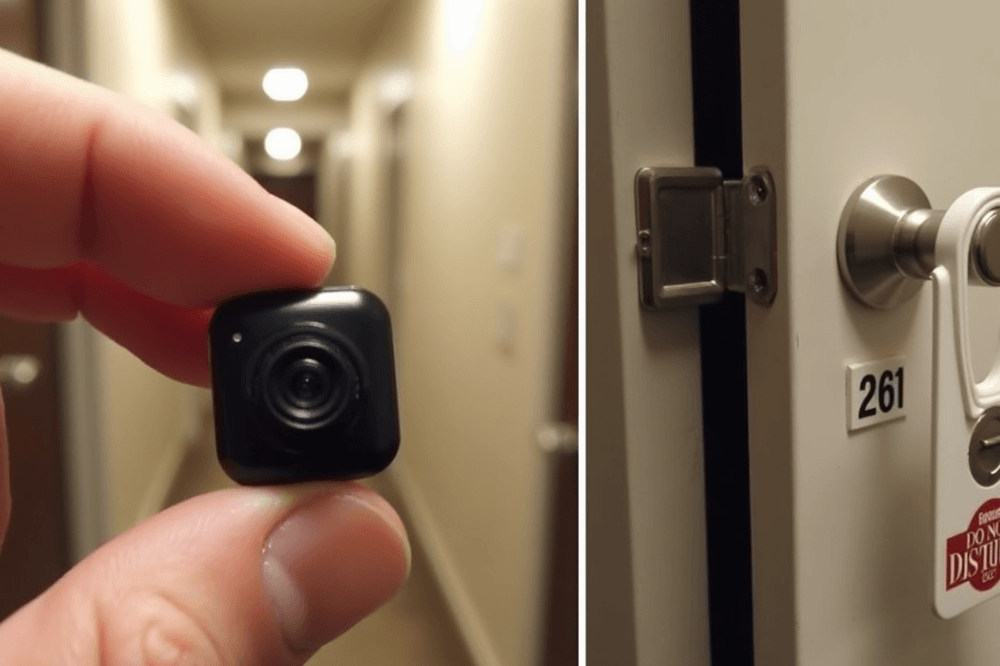
A calm, methodical guide to detecting surveillance devices in rentals, hotel rooms, Airbnb’s and even your own home — you’ll be pleased to hear that no expensive equipment is required.
Wondering how to find hidden cameras on property you’re staying in or managing? You’re not overreacting. Knowledge of covert surveillance has grown significantly as miniaturized camera technology has become cheaper and more widely available. Whether you’re checking into a vacation rental, moving into a new apartment, or simply want peace of mind at home, knowing how to detect those creepy hidden cameras is a privacy necessity — not a sign of paranoia.
This guide walks you through every stage of inspection: what to look for with your naked eye, how your smartphone can work as a detection tool, what a radio frequency (RF) detector does, and exactly what steps to take if you actually find something suspicious. No scaremongering — just expert, practical advice.
Hidden camera tech has shrunk dramatically. What once required a closet full of CCTV equipment can now fit inside an alarm clock, a smoke detector housing, a USB charger, or even a picture frame. Many hidden cameras operate on Wi-Fi or Bluetooth, streaming footage directly to a remote viewer without any local storage at all.
For renters and Airbnb guests especially, this creates a huge concern. A landlord or host who installs cameras in private spaces — without consent — is almost definitely violating both privacy law and platform rules. Even property managers who use legitimate security cameras are typically required by law to disclose them. Knowing how to find these hidden cameras allows you to be sure that the spaces you stay in are actually private.
“A two-minute inspection when you arrive costs nothing. The alternative — discovering a camera days later — could potentially ruin your life!”
Before using any detection device, trust your instincts. There may be tell-tale signals worth noting when you first enter a room or rental space.
Hidden cameras are often tucked into everyday objects. Surveillance devices are most effective when they’re inconspicuous, which means they tend to be in objects we never think twice about. These are the places you should always check during any inspection.
A smoke detector fixed to the ceiling has a nearly perfect 360-degree view of a room and is almost never touched by guests. Hidden cameras installed inside smoke detector housings have been found in Airbnb rentals and hotel rooms. Look for a lens opening or an extra hole in the casing. Legitimate smoke detectors don’t have glass lenses — if you see one, it is definitely worth investigating further!
Bedside alarm clocks and clock radios are very common hiding spots. They’re always plugged in (which solves the battery problem), they usually face the bed, and nobody moves them. A camera hidden in a clock face has an unobstructed view of nearly the entire room so this should be one of the first places you need to secure!
USB wall chargers with embedded cameras can be bought online very cheaply. They look identical to normal chargers and don’t require a separate battery. These are among the hardest hidden surveillance devices to detect visually, because the camera lens is often disguised as a charging indicator light.
Cameras in private spaces — especially bathrooms — are not only deeply invasive, they’re illegal in virtually every country. Common objects used to house a camera in these spaces include shampoo bottles, air freshener dispensers, electric lights positioned near shower areas, tissue boxes, and can you believe — towel hooks! Any object that seems out of place in a bathroom deserves a second look.
Smart cameras are getting smaller all the time. The front bezels of televisions, smart speakers, and even thermostats can hide a pinhole camera lens. Tilt the angle of your flashlight against any smooth surface and look for a lens reflection — more on this method is discussed below.
Some hidden cameras are placed behind two-way mirrors, which let someone record from the other side while still looking like an ordinary mirror. To check, press your fingertip gently against the glass. In a regular mirror, you’ll see a small gap between your finger and the reflection. With a two-way mirror, the reflection appears to touch your fingertip right away. You can also turn off the lights and shine a flashlight at the glass — if there’s a hidden space behind it, the light may pass through.
Knowing how to find hidden cameras effectively means being patient and methodical. Walk around the room slowly and work in zones — don’t dart around. Here’s how to do a thorough check.
Many hidden cameras use infrared light for night vision, which is invisible to the naked eye but detectable with a smartphone camera. You should darken the room completely and give your eyes 30 seconds to adjust. Look for any faint red or purple glow coming from objects — these are infrared LEDs. Check smoke detectors, chargers, clocks, and air vents first.
Camera lenses often reflect light with a distinctive blue-violet glint that differs from ordinary glass or plastic. In a darkened room, use a flashlight — or your phone’s flash — and slowly run it across all surfaces at eye level, then at the ceiling level. Look for a small, bright reflection that doesn’t match the surrounding material. This technique can reveal a pinhole camera lens that is otherwise virtually invisible.
Most smartphone front-facing cameras don’t have infrared filters, which means they can “see” infrared light that your eyes cannot. Open your phone’s camera app and point it at a suspected device. If you see a white or pink glow from something that appears dark to your naked eye, it may be giving off infrared — a strong sign it’s an active camera with night vision capabilities.
Most modern hidden cameras send footage wirelessly over a Wi-Fi network. Connect to the property’s Wi-Fi and use a network scanning app (Fing is free and widely used) to list every device connected to the router. Look for unfamiliar device names — particularly items labeled as “IP camera,” “IPC,” or with manufacturer names like Hikvision, Dahua, or similar. An large number of connected smart devices on a rental’s Wi-Fi might be suspicious.
A radio frequency (RF) detector picks up signals emitted by cameras transmitting over wireless frequencies including Wi-Fi and Bluetooth. Walk slowly around the room with an RF detector at arm’s length. When the detector’s signal strengthens near an object, investigate it further. RF detectors won’t catch wired cameras or cameras recording locally to a memory card, but they’re very effective against most wireless cameras found in rentals such as Airbnb’s.
If you find a suspicious device, examine it closely without touching or damaging it. Use your flashlight to look for a lens, a microphone hole, or any opening that looks strange and out of place. If the object has a brand name, search for it online — legit security cameras have proper product pages; a camera disguised as a charger will only appear in spy-device retailers.
A basic inspection doesn’t require any fancy gear — just your eyes, your smartphone, and a flashlight are enough to get started. But if you really want to up your detective game and stop yourself and your partner from ending up on an R-rated website, adding a few simple tools can make you way better at spotting hidden cameras.
A note on “image scanner” apps: Many mobile apps claim to detect hidden cameras using your phone’s camera or magnetic sensor, but they often don’t work well. Phone‑based detection is only somewhat reliable for spotting infrared light. If you want to scan for radio signals, use a proper RF detector — it’s much more effective than any app.
Discovering hidden devices can be incredibly distressing and disturbing. Don’t freak out is rule number one. Just stay calm, and follow these steps in the right order.
Photograph and video the camera in place before touching or moving anything. This preserves evidence and documents the angle, the room it’s pointed at, and its exact location. Use your mobile phone and take lots of pictures from different angles.
If you find a camera in a bathroom or bedroom — especially in a rental — trust your gut and get out. You’re not on the “Big Brother” reality TV show, and you don’t owe anyone the right to film you in private. Grab your stuff, leave the place, and find somewhere that actually respects your privacy.
For cheaper accommodation and Airbnb rentals and other short-term stays, report the camera to the platform immediately. Airbnb’s policy on hidden cameras in private spaces is super-clear: it is a violation that can result in permanent removal from the platform. Your landlord, if applicable, should also be notified in writing.
Planting a hidden camera in a bathroom, bedroom, or other private space without consent is a criminal offense in most developed countries. Contact the local police and provide your photos to back up your claims. Many regions have specific laws covering surveillance cameras in private spaces — local police can advise on the next steps and preserve the device as evidence.
Putting cameras in private areas without consent isn’t just creepy — it can also land someone in hot water both criminally and in civil court. If you think you’ve been recorded, a quick chat with a lawyer who knows privacy law can help you figure out what you’re entitled to and what steps make sense next.
Your smartphone is a useful “first-defense” tool, but it has limits. It can reliably detect infrared light from night-vision cameras using the camera app, and it can run network scanning apps to find cameras connected to a Wi-Fi network. However, it won’t detect cameras that record locally without transmitting wirelessly, and it can’t scan for RF or Bluetooth signals the way a dedicated detector can. For a thorough check, combining your phone with a basic RF detector is sufficient.
Verified incidents of hidden cameras in Airbnb rentals have been reported from all corners of the planet, though they remain a small fraction of overall stays. Airbnb strictly prohibits cameras in private spaces such as bedrooms and bathrooms, and requires hosts to disclose any cameras in common areas. That said, policy and reality don’t always marry-up. Inspecting your hotel room or apartment on arrival — especially checking smoke detectors, bedside objects, and bathroom items — takes only a few minutes and provides real peace of mind.
Hidden cameras use several different technologies. Many hidden cameras use Wi-Fi to stream footage to a remote viewer in real time. Others transmit over Bluetooth or dedicated RF frequencies. Some record directly to a local memory card with no wireless signal at all — these are the hardest to detect remotely and won’t appear on a network scan. Wired cameras connected directly to a recording device also exist, though they’re less common in covert setups because they require physical cables.
Laws vary by country and state, but in most places a landlord may install cameras in common exterior areas (entrances, hallways, parking lots) on the condition that they are properly disclosed — but is strictly forbidden from placing cameras inside a tenant’s private living space, particularly in bedrooms, bathrooms, or anywhere a renter has a reasonable expectation of privacy. If you discover cameras installed by a landlord inside your apartment without your knowledge or consent, this is probably a violation of both tenancy law and criminal surveillance statutes. Document the cameras and consult a legal professional straight away.
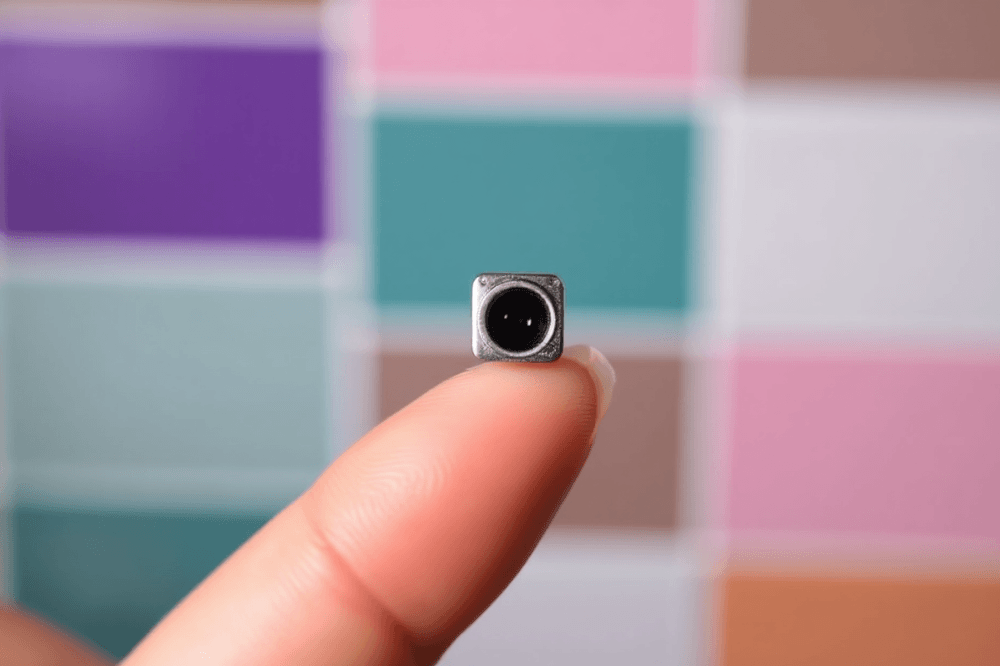
A pinhole camera lens is extremely small — usually around 1–3mm in diameter — and can be nearly invisible against a dark or textured surface. The lens itself is a tiny circle of glass that, under direct flashlight, produces a distinctive reflection compared to the surrounding material. Pinhole cameras are often placed in objects that already have small holes or openings: buttons, screws, speaker grilles, or small ventilation holes. Looking for a lens-glass glint in a dark room with a flashlight is still the most effective low-tech method for spotting them.
In most cases, no — not immediately. Leaving the camera in place and undisturbed preserves the evidence for any police investigation. They might analyze the device for fingerprints and forensics. The exception is if the camera is actively recording you in a private space (like a bathroom) right now — in that case, covering it or removing yourself from the room is both reasonable and justified. Document everything with your own phone before taking any action, and contact police as soon as possible so they can advise you on handling the evidence appropriately under their specific local law.